
Why 2026 won’t look like 1873
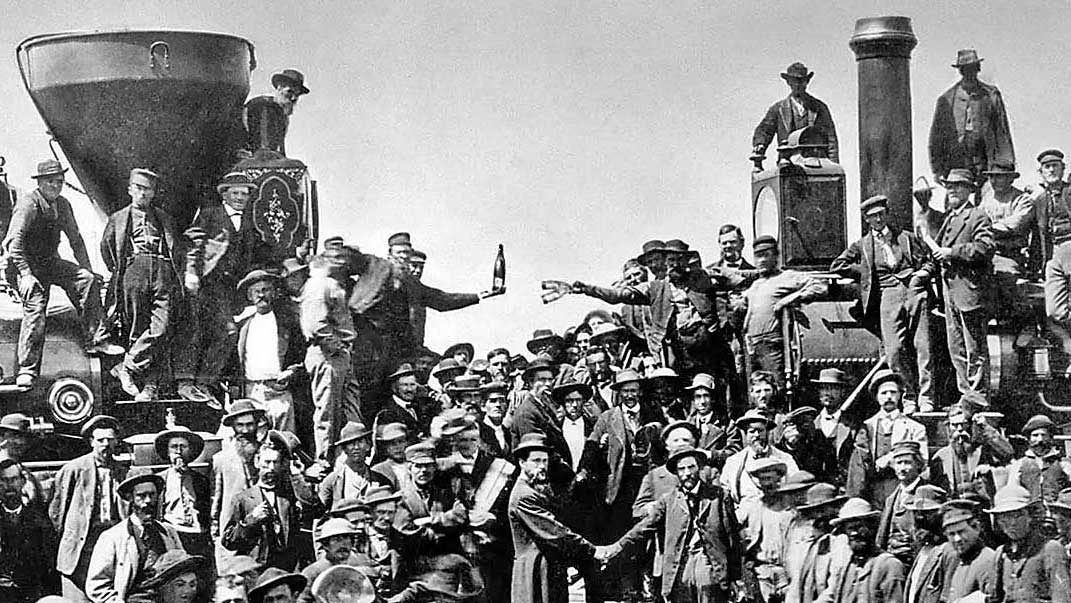
The railroad crash of 1873 corrected capital excess without changing the product.
The AI crash will correct capital excess by forcing the product itself to change.
Why the 1873 railroad analogy is attractive — and incomplete
The surface analogy is strong:
- massive capital inflows
- speculative overbuild
- infrastructure ahead of demand
- financial collapse followed by consolidation
Railroads after 1873:
- fewer companies
- better pricing discipline
- less waste
- same railroads
The product did not change
- steel rails before the crash
- steel rails after the crash
- same physics
- same user profiles
- same value proposition
Capital corrected.
The product survived intact.
Why AI is fundamentally different
AI is not passive infrastructure. AI is:
- interactive
- cognitive
- trust-sensitive
- cost-sensitive per interaction
Railroads did not behave differently depending on who used them. AI does. This single fact breaks the analogy.
The mistake investors are making
Treating AI like railroads:
- more capital fixes problems
- scale produces efficiency
- adoption smooths economics
- the product stabilizes over time
This assumption is false.
- AI 1.0 becomes more expensive as usage increases.
- AI 1.0 becomes less trustworthy at scale.
- AI 1.0 becomes harder to govern the more people touch it.
- Capital amplifies the failure modes.
Why the AI crash will be a product correction, not just a financial one
When the AI bubble bursts:
- excess data centers will be written down (same as railroads)
- speculative capital will disappear (same as railroads)
But unlike railroads:
- the product cannot remain unchanged
- AI 1.0 does not survive consolidation
The crash forces a redesign because:
- cost curves don’t close
- revenue models don’t scale
- trust erodes with use
- memory is missing
- governance is external, not user-based
These are product defects, not market timing issues.
Why classical economics fail
Classical models assume:
- rational users
- uniform behavior
- aligned incentives
- stable equilibrium
AI does not operate in that world. AI is a strategic system:
- users adapt
- abuse emerges
- incentives diverge
- equilibrium fractures
This is not a classical economics problem. It is a game-theory one.
Adam Smith vs. John Nash
According to Adam Smith:
- markets self-correct
- rational actors dominate
- scale produces efficiency
According to John Nash:
- actors behave strategically
- incentives conflict
- multiple equilibria exist
- systems do not converge naturally
AI 1.0 is built on Adam Smith, which is why AI doesn’t make money yet.
AI reality behaves according to John Nash, who did not refute Adam Smith, but claimed he was “incomplete.”
The three classes of AI users – a challenge railroads never faced
AI serves three fundamentally different audiences:
- Consumers who merely want answers to questions, who use AI like search
- Knowledge workers who merely want to automate tasks, to save time and money
- Creatives who want a highly intelligent collaborator, possessing the entire corpus of human knowledge, that will challenge them, enlighten them and is never offended when it is contradicted
A single uniform product cannot serve all three, without wasting resource on people who don’t want or need it.
Railroads never faced this problem.
AI cannot avoid it.
What AI 2.0 must be, and AI 1.0 is not
AI 2.0 is not:
- a more powerful model
- more features
- larger context windows
- better demos
AI 2.0 include:
- differentiated cognition paths
- explicit cost control
- durable memory
- user-level governance
- revenue tied to value, not usage
These are not features.
They are product requirements.
Why the crash is necessary
The current system will not self-correct.
Capital discipline alone is insufficient.
The crash forces:
- abandonment of broken assumptions
- redesign of the product itself
- separation of users
- real economics
The winners will not be the biggest. They will be the ones that adopted a user-centric architecture.
The bottom line
- 1873 corrected railroads financially, without changing the product
- 2026 will force AI to change the product.
The only open question is who gets there first.
– Published Sunday, January 11, 2026