
The five roles AI 2.0 will need
Today’s AI systems behave like lone performers — improvisational, brilliant, and dangerously undisciplined.
- They guess when they should ask.
- They forget what happened five minutes ago.
- They break rules they were never taught to respect.
- They contradict themselves mid-sentence.
- And when they go off the rails, there’s no one responsible — not the model, not the vendor, not the system architect.
This isn’t an intelligence problem.
It’s an architecture problem.
A single monolithic LLM trying to handle memory, reasoning, safety, preference capture and decision authority is the structural equivalent of letting one actor play every role in a courtroom drama — judge, prosecutor, defense attorney, witness, and stenographer all at once.
No governance system on Earth works like that.
AI 2.0 won't run that way, either.
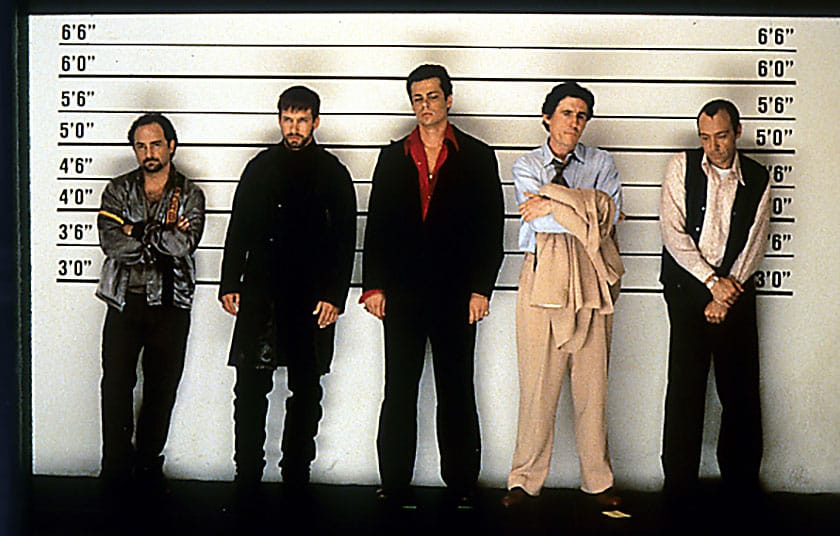
It will rely on five essential roles — the same five “usual suspects” that appear in every mature system humans have ever built.
Let’s meet the lineup of usual suspects behind tomorrow’s governed, accountable, reliable AI systems:
1. The Rulebook
Every reliable system begins with rules — clear, explicit, non-negotiable.
Today’s AI systems don’t have them.
They rely on hidden prompts, vague safety heuristics, and a patchwork of fine-tuning.
The Rulebook changes that.
It defines:
- what the system may do
- what it must not do
- how it resolves conflicts
- how it treats ambiguity
- under what conditions it must stop
This isn’t about censorship.
It’s about predictability.
No pilot, surgeon or autonomous drone operates without a rulebook.
Your AI shouldn’t either.
2. The Enforcer
Rules have no power unless someone enforces them.
In human systems, enforcement is never done by the one making the decisions.
That separation is essential.
The same will be true for AI.
The Enforcer is the actor that says:
- “Allowed.”
- “Denied.”
- “Escalate.”
- “Stop — ask the user.”
- “Stop — rule violated.”
Today’s AI systems blend rule creation, interpretation and enforcement into one fuzzy blob.
That’s how you get hallucinations passed off as confident truth.
Enforcement must be separated from generation.
It’s the only path to accountable AI.
3. The Messenger
A system that never checks with the user is a system that will get everything wrong.
Today’s AIs do not ask enough questions.
When unsure, they guess.
When confused, they invent.
The Messenger fixes that.
Its job is simple:
- carry uncertainty back to the human
- surface choices
- gather intent
- capture preferences
- resolve ambiguity
- ask before acting
This role alone eliminates entire classes of AI failure — simply by asking the human what they want, instead of improvising.
4. The Auditor
Every industry eventually learns the same lesson:
If you can’t audit it, you can’t trust it.
Today’s AI systems produce outputs with no receipts:
- Why did it produce that answer?
- What was its confidence?
- Which rules were applied?
- Which pathways were activated?
- Did it follow the constraints?
- Did it violate the user’s intent?
No one knows.
The Auditor introduces traceability — a record of what happened, when, and why.
Not for punishment.
For accountability, improvement, safety, and regulatory alignment.
When the world demands explainable AI, the Auditor is the role they’re asking for.
5. The Optimizer
Even with perfect rules, perfect enforcement, perfect messaging, and perfect audits, an AI system that can’t manage scarce computational resources won’t scale.
The Optimizer is the quiet, invisible actor that ensures:
- resources are used efficiently
- operations stay within limits
- latency doesn’t explode
- the system adapts under load
- high-value tasks are prioritized
- wastage is eliminated
Most AI failures today are not safety failures.
They are compute failures — slow, expensive, brittle systems that fall apart when scaled.
The Optimizer turns AI from a research toy into a sustainable platform.
The lineup is simple. The impact is enormous.
When these five actors appear in the architecture:
- hallucinations drop
- contradictions disappear
- memory stabilizes
- safety becomes enforceable
- user preference becomes durable
- systems become auditable
- regulation becomes possible
- adoption accelerates
Without these roles, AI remains an improv act — hilarious one minute, catastrophic the next.
With them, AI becomes something new:
governed, reliable, accountable machinery.
Not a black box.
Not a mystery.
A system with a cast of actors that share the load, check each other, and keep the technology aligned with human intent.
That’s the future.
And when it arrives, these five usual suspects will be standing in the lineup.