
“I alone can fix it”
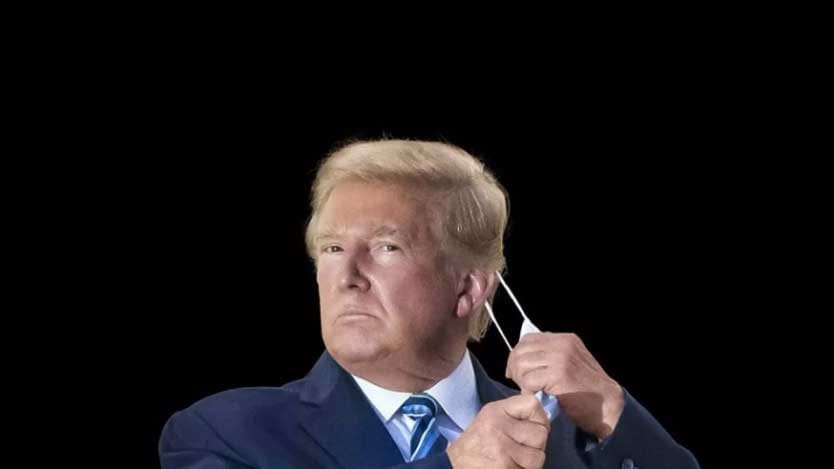
I hate Donald Trump. But when he said, “I alone can fix it,” I knew exactly what he meant.
Because that’s how I feel about online dating.
I’m not saying it out of arrogance. I’m saying it out of lived experience.
I’ve been through it all. I’ve sat across from women like Karen — me hopeful, expectant — and then felt that gut-punch of rejection, the hurt that leaves you reeling for days.
That night, I realized something bigger: if I felt this bad, millions of people must be feeling it. Every. Single. Day. And not because they’re unlovable — but because the system is designed to fail. Apps only succeed (financially) when their subscribers fail.
This aggression will not stand. Not on my watch.
I know platforms. I’ve redesigned newspapers from New England to New Zealand, boosting readership and revenue.
A Lesson from New Zealand
In Auckland, I spent two weeks inside the newsroom of the Sunday Star-Times with editor Cate Brett. It was a true newspaper war: her broadsheet was under siege from a faster, flashier tabloid that had stolen ten percent of her readers. Most editors would have panicked and chased the gimmicks. Cate didn’t. She wanted to fight for readers without betraying the journalism.
Together we rebuilt the paper’s front page, line by line, headline by headline, testing which choices could boost sales without dumbing down the product. Cate’s call at the end summed her up: “Let’s take a bold step into the future.” She risked the safer option for the right one — integrity over expediency — and it worked.
That experience shaped how I build systems now. The medium can evolve, but the mission can’t. Whether it’s a newspaper or an AI platform, the real problem is never the interface — it’s the integrity.
In “The Founder”, Michael Keaton as Ray Kroc delivers a speech about persistence beating talent, education, even genius. Kroc himself was ruthless and deeply flawed — I’m not endorsing the man. I’m endorsing the idea: when the mission is right, persistence is the multiplier. That’s how I work. It’s how I’ve always worked.
I’m the guy the LA Times thought “might rope journalism back to a financial mooring.” In 2007, Marketplace interviewed me alongside Craig Newmark after I built a site NPR called “Craigslist meets YouTube.” I built and sold a website with millions of users and a 73.6% profit margin.
In 1991, the Society for News Design (SND) named just 12 newspapers worldwide as “Best-Designed.” I designed five of them. Five of the 12 best-designed newspapers in the entire world. All designed by a single person. That had never happened before. Or since.
In Norfolk, Virginia, I created a franchise that became a smash success. My 1987 redesign of an existing Total-Market-Coverage (TMC) product boosted revenue 44%.
Then I built a system to syndicate that product to 22 other newspapers — including The Dayton Daily News and The Orange County Register.
Here’s how I did it:
I leveraged the emerging technology of desktop publishing and QuarkXPress, then merged it with a legacy mainframe system called Atex, which consisted of dumb terminals wired to six DEC PDP-11s.
Atex had a functionality called “Exchange.” I wrote a custom driver that replaced Atex format names with QuarkXPress tags, then imported those Atex ASCII files into XPress via an XTension called “Atan Express,” which was created by John Juliano.
I even met Tim Gill, the creator of QuarkXPress, and gave him feedback that made it into his next release. The revolution I sparked with that TMC product eventually led to an acquisition by The Tribune Company.
So how did I boost revenue 44 percent? Simple: I solved the real problem. Advertisers didn’t believe readers touched TMCs. Editors tried to solve this problem by repackaging “quality” stories, but that wasn’t what advertisers cared about – they just wanted their ads to be seen.
They didn’t know if readers were reading or not; they just believed they weren’t.
My solution? Change their belief. I told the newsroom to flip the content 180 degrees — publish only the weird, offbeat stories they’d normally spike – like Joey Chestnut, the hot dog-eating-contest king – and the crazy stuff no one else would print. It didn’t matter whether anyone actually read it. What mattered was that advertisers believed readers couldn’t resist it. And once they believed that, they bought more ads.
The result: revenue up 44% in Norfolk. Later, in Waterbury, Connecticut, I ran the same play and revenue jumped 673%.
Bottom line: I didn’t just redesign TMCs — I reinvented the category. By leveraging emerging desktop publishing tech and flipping the editorial model upside down, I turned a dying product into a revenue engine.
In 2011, I conceived, wrote, and produced four national TV spots to promote sites I had built from scratch. For one of them, I personally hired R.O. Blechman — the legendary illustrator behind the iconic 1967 Alka-Seltzer commercial and countless New Yorker covers. His distinctive hand-drawn style later echoed in campaigns as visible as Red Bull’s animations.
I wrote the copy, conceived the idea, and worked with a gifted video editor, Cory Kaplan – I’m sure he is a genius. He was a contestant on “The Weakest Link.” I think he is INTP.
Cory’s craft and Blechman’s animation brought my vision to life.
This spot took direct aim at the University of Phoenix’s “I Am a Phoenix” campaign. Instead of promising transformation, it mocked the gap between a University of Phoenix’s four-year degree and employability — and then flipped their slogan with the closer: ‘Do you wanna be a Phoenix, or do you want to find a job?’”
But I wanted more. I wanted Morgan Freeman to read the tagline. Of course, I couldn’t land Freeman on my $5,000 budget — most of which went to Blechman.
But I knew what I wanted, so I went to StudioCenter, a production company in Virginia Beach. They found me a Freeman sound-alike in Los Angeles and connected me via DSL so I could direct him live from their studio in Virginia Beach.
The actor nailed it. He delivered the tagline exactly the way I had imagined Freeman would. He even recorded a Morgan Freeman ringtone for my daughter as a freebie.
I had so much fun working with all of them: Bleckman, Cory Kaplan, the engineer at StudioCenter and the voice actor in Los Angeles — proof that I know how to collaborate with world-class talent, elevate others’ contributions, and deliver a complete product
Bottom line: In less than two weeks, I partnered with R.O. Blechman — one of the world’s most distinctive animators — and a top video editor to produce a national, broadcast-quality commercial tied directly to a site I had designed and built.
The total budget was $5,000, versus the $250,000 and six months a traditional agency would have required. That project, and three others like it, followed the same pattern: conceive the idea, build the platform, and deliver a finished TV campaign at national scale by focusing only on what mattered.
But I’m not just a résumé of wins. I have scars. And those scars taught me lessons I carry into MagneticMatch™.
realpeoplerealstuff.com — I invested $100,000. Met with a team of investors from Japan. Got name-checked twice by The Wall Street Journal and The Washington Post. Appeared on NPR with Craig of Craigslist. But I couldn’t make it work, so I shut it down two years after launch.
Here was my mistake: I tried to leverage my relationship with newspapers – they once owned the classified space — along with my partner, Janet DeGeorge, who is still the best classified advertising trainer in the world. Bar none.
But newspapers didn’t get it. I should have done what Alan Mutter of UC Berkeley told me to do: Fuck newspapers.
clicktopick.com — A game site linking culture to narratives about iconic characters and motifs: Sports, Shoes, Game of Thrones, Star Wars, Harry Potter. Nada.
I pivoted it toward dating for people with shared passions. Crickets.
I spent 18 months and $30,000 on custom development with Ebizon, Sudeep Goyal and Pursharah Ahura — brilliant coders, great collaborators with whom I remain good friends. Ported it to four languages. Hired translators via Upwork. Still friends with my Russian translator — we bonded over Game of Thrones.
But I shut it down after 18 months with zero traction. My ex-wife was right “You’re building this thing for you, Fucko. Nobody gets it.”
artofboatrepair.com — Meant to be “Angi for boats.” Strategic error: I built a global footprint, but boat repair is local. Execution error: too many features, too much friction. Four months, $15,000, and I learned that simplicity beats feature bloat every time.
Now let’s talk about AI
With AI, I can build in five days what would have taken me five months. That means I know exactly what an AI-driven dating app can’t do — and what it can. And I know how to leverage what it can do so more people can have more meaningful connections.
I’ve been here before. For three decades I built newspaper prototypes that no newsroom could fully replicate — and that was by design. The goal was never imitation; it was elevation. I engineered systems so that when a team reached even 75% fidelity with my pages, the transformation was complete.
MagneticMatch™ is built on the same principle. This time, I’m not leveraging mainframes — I’m leveraging AI — to let ordinary users perform at 75% of my skill on their own profiles. That’s the magic threshold. At that level, their profiles become magnetic, their conversations authentic and their matches real.
I was a coder once. In 1995, I built BrassTacksDesign.com — and the code I wrote then still runs lightning fast today, nearly three decades later. But these days my leverage isn’t in writing every line. It’s in designing the system, setting the standard and editing prototypes with ruthless clarity until they work
I don’t want a fragile system. I believe in redundancy. Do you know why pilots who cross oceans prefer airplanes with four engines? Because no one makes an airplane with five.
That philosophy doesn’t just apply to code or design. It applies to people.
Recently I bought lightly used Subaru. I didn’t walk in planning to perform an act of kindness. I walked in because I needed a test drive. But while I was there, I made a point to engage with every person I met. Not to make small talk. Not to gain leverage. Not even to be “sociable.” I asked because I was genuinely interested in them as people.
That’s the heart of what I’m building with MagneticMatch™. Not just systems that work. Not just teams that execute. But a platform where people are truly seen — not as roles, not as functions, not as profiles in a database, but as human beings.
I move fast. In just seventeen days, I — working entirely with ChatGPT-5 — published seventy distinct pieces of intellectual property. Each one was designed, written and deployed with purpose.
Speed without clarity is chaos. Clarity at speed is leverage. But I can only collaborate with people who match my pace.
My role is not to code or grind. Like Steve Jobs, my value is in vision and ruthless clarity. I design the system, set the standard, and review prototypes with painful specificity. In minutes, I can see what others miss and point to exactly what’s wrong. That’s how I move fast — not by building everything myself, but by forcing every iteration closer to the target until it’s undeniable.
I’m not here to waste 6 months over $1M. Online dating is a $10B+ space. My play is capital-efficient: a pre-traction acquistion or a defensive acquisition. Build just enough to prove it, then force the giants to decide — pay now or fight later.
Trump said “I alone can fix it.”
I borrowed that line on purpose — because swagger without substance breaks things, and fixing them can be lonely — nobody gets what you are doing – they think you are crazy. They feel sorry for you and your obsession with your delusion.
This isn’t for the timid. This is for the courageous. Because the biggest risk is not taking one.
