
Kourtney: Your turn-ons don’t matter. You magnetic match’s do.
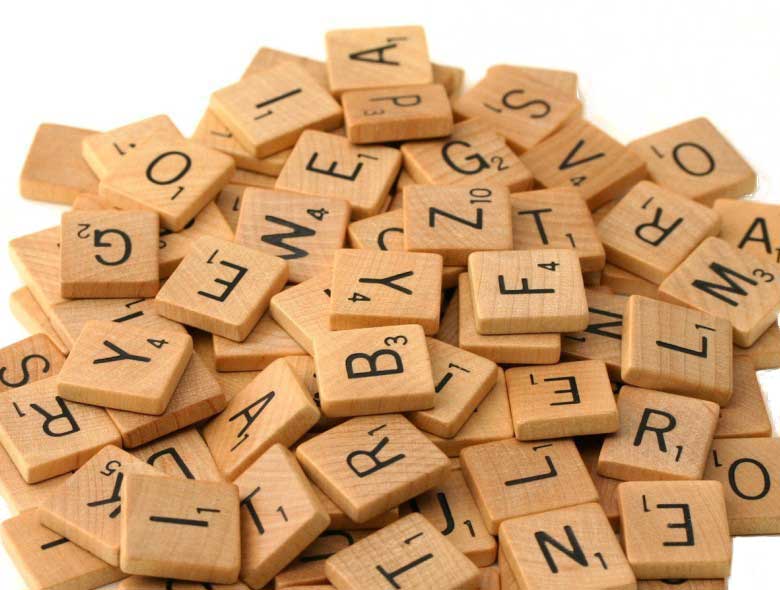
Her name was Kourtney. Her game was Scrabble. She beat me nine games out of ten. That’s exactly why I fell for her.
Because, as an INTJ, learning is what turns me on. And I learned by losing to her. For instance, Kourtney had memorized all 107 Scrabble-legal two-letter words. That made her a winner — in more ways than one.
And oh how I made her laugh! She told me I was the funniest man she ever met. We binge-watched Seinfeld and Curb Your Enthusiasm for hours.
Kourtney was an ESFP. Everyone loved her and was drawn to her. And she loved the limelight — think Marilyn Monroe (ESFP) or John Kennedy (ESFP) — irresistible to all.
But did those famous ESFPs make meaningful connections? Marilyn was married three times in her short life; Kennedy was a famously unfaithful.
Unsurprisingly, our relationship didn’t last.
Which once again reveals something about the Myers-Briggs types. No type is universally best; all that matters is your Magnetic Match — a match aligned most closely with the values that matter most to you, not merely shared interests, such as fun and games.
In a nutshell:
- She thrived on spontaneity → I thrived on structure.
- She sought external validation and limelight → I valued privacy and depth.
- She wanted fun in the moment → I wanted long-term planning and meaning.
- She laughed at everything → I sometimes needed seriousness and focus.
So why did it feel magnetic at first but unsustainable in the end? Here’s what the INTJ–ESFP pairing looks like through the Myers-Briggs lens.
1. Shared axis: Intuition (N) vs. Sensing (S)
ESFPs live in the here and now, tuned into the sensory world. They thrive on immediate experiences, novelty, and external stimulation.
INTJs live in the future, oriented by vision and strategy. They thrive on depth, abstraction, and long-term planning.
Together, this creates sparks: the INTJ is drawn to the ESFP’s aliveness; the ESFP is drawn to the INTJ’s depth. But over time, the gap between “now” and “later” can stretch thin.
2. Energy flow: Extraversion (E) vs. Introversion (I)
- ESFPs draw energy from people and external engagement. They shine when they’re out in the world, being seen, celebrated, validated.
- INTJs recharge in solitude, finding energy in focus and quiet.
- The ESFP’s constant outward pull can feel exhausting to the INTJ, while the INTJ’s inward retreat can feel rejecting to the ESFP.
3. Decision-making: Feeling (F) vs. Thinking (T)
- ESFPs lead with Fi (introverted feeling), making decisions based on what feels authentic in the moment.
- INTJs lead with Te (extraverted thinking), making decisions based on logic, efficiency, and results.
- To the INTJ, the ESFP can seem inconsistent or unserious. To the ESFP, the INTJ can seem rigid or cold.
4. Lifestyle: Perceiving (P) vs. Judging (J)
- ESFPs want freedom, spontaneity, the ability to pivot when the mood changes.
- INTJs want closure, structure, and commitments that stick.
- That’s why Scrabble itself was symbolic: Kourtney loved the fun in the moment; I loved the mastery and long-term learning.
Why It Failed
At first, the relationship worked because each of us offered the other something missing:
- I gave Kourtney depth, stability, and laughter that went beyond the surface.
- She gave me playfulness, lightness, and a window into spontaneity.
But in the long run, the differences widened:
- I sought structure, privacy, and meaning.
- She sought freedom, attention, and fun.
Neither is wrong. It’s just that her ESFP values didn’t align with my INTJ priorities. That’s the essence of Magnetic Match: attraction is real, but sustainability depends on shared values.
This bears repeating: No type is universally “best.” ESFPs are magnetic for many — their light lights up entire rooms. But for an INTJ, unless you crave a partner who thrives on spontaneity, limelight, and laughter above all, the glow eventually blinds more than it warms.
In the end, my turn-ons — learning, laughing, and Larry (David) — weren’t enough.
What matters is not what excites you in the moment, but whether your Magnetic Match’s values align with your own. Your turn-ons don’t matter. Your Magnetic Match’s do.