
AI reform
An open letter to Mark Zuckerberg
 Meta has never had a distribution problem.
Facebook, Instagram and WhatsApp give Meta reach that no other company can touch. When Meta ships something that resonates, adoption follows quickly and visibly.
That’s why the signal coming out of LLaMA matters.
Despite massive investment, widespread publicity, and deep integration across Meta’s ecosystem, LLaMA has not driven sustained user adoption. Usage has plateaued. Engagement has stabilized. Growth has stalled. The curves are flat.
See story
Meta has never had a distribution problem.
Facebook, Instagram and WhatsApp give Meta reach that no other company can touch. When Meta ships something that resonates, adoption follows quickly and visibly.
That’s why the signal coming out of LLaMA matters.
Despite massive investment, widespread publicity, and deep integration across Meta’s ecosystem, LLaMA has not driven sustained user adoption. Usage has plateaued. Engagement has stabilized. Growth has stalled. The curves are flat.
See story
An open letter to Jeff Bezos
 Amazon was built on a simple idea: anything that scales must get cheaper.
That principle turned retail margins into logistics mastery. It turned AWS into the backbone of the internet. It turned cost discipline into a competitive weapon.
AI breaks that rule.
At Amazon, AI doesn’t fail because of lack of adoption. It fails because the cost curve runs the wrong way.
See story
Amazon was built on a simple idea: anything that scales must get cheaper.
That principle turned retail margins into logistics mastery. It turned AWS into the backbone of the internet. It turned cost discipline into a competitive weapon.
AI breaks that rule.
At Amazon, AI doesn’t fail because of lack of adoption. It fails because the cost curve runs the wrong way.
See story
An open letter to Sundar Pichai
 Gemini 3 is widely regarded as the strongest reasoning model in the field. On benchmarks, on logic, on structured problem-solving, Google has finally reclaimed technical superiority.
You also control the largest distribution engine in human history. Search. Android. Chrome. YouTube. Workspace. On paper, that combination should be unbeatable. But it won’t deliver what you really need: adoption.
See story
Gemini 3 is widely regarded as the strongest reasoning model in the field. On benchmarks, on logic, on structured problem-solving, Google has finally reclaimed technical superiority.
You also control the largest distribution engine in human history. Search. Android. Chrome. YouTube. Workspace. On paper, that combination should be unbeatable. But it won’t deliver what you really need: adoption.
See story
An open letter to Satya Nadella
 While every other hyperscaler built or retained direct control over its AI future — Alphabet with Gemini, Meta with LLaMA, Apple with Apple Intelligence — Microsoft outsourced its future to Sam Altman. He is a brilliant technologist. But he is not a stable enterprise leader. He has been fired once by his own board. He has presided over repeated governance crises. He has written memos that should never have been written, let alone leaked. And he has demonstrated, again and again, that he improvises in moments that demand discipline.
See story
While every other hyperscaler built or retained direct control over its AI future — Alphabet with Gemini, Meta with LLaMA, Apple with Apple Intelligence — Microsoft outsourced its future to Sam Altman. He is a brilliant technologist. But he is not a stable enterprise leader. He has been fired once by his own board. He has presided over repeated governance crises. He has written memos that should never have been written, let alone leaked. And he has demonstrated, again and again, that he improvises in moments that demand discipline.
See story
An open letter to Tim Cook
 Apple has always won platform shifts not by being first, but by being right. By shipping systems people trust with their lives, their photos, their money and their private thoughts.
Which raises the real question: Is Apple being careful—or is Apple stuck? Because AI 1.0 is not something Apple can ship safely. And that is Apple’s dilemma.
See story
Apple has always won platform shifts not by being first, but by being right. By shipping systems people trust with their lives, their photos, their money and their private thoughts.
Which raises the real question: Is Apple being careful—or is Apple stuck? Because AI 1.0 is not something Apple can ship safely. And that is Apple’s dilemma.
See story
AI 2.0 needs a threesome
 Settle down, Beavis. It’s a threesome with a librarian, a cop and an accountant: memory, governance and revenue. I know it’s not the ménage à trois you were hoping for, but this is serious business. Before we define what comes next, we need to remember how the web got its reboot — because AI today looks exactly like the web did in 2003
See story
Settle down, Beavis. It’s a threesome with a librarian, a cop and an accountant: memory, governance and revenue. I know it’s not the ménage à trois you were hoping for, but this is serious business. Before we define what comes next, we need to remember how the web got its reboot — because AI today looks exactly like the web did in 2003
See story
Embarrassment is the strongest quality control system ever invented
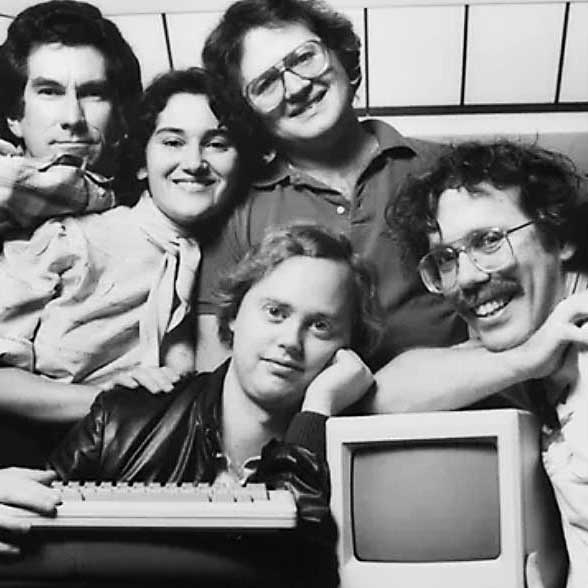 Every system people truly trust has something in common: a name attached to it. Not a brand. A person. Or a very small team.
When no one owns the output end-to-end, quality degrades. Errors become “edge cases.” Hallucinations become “known issues.” Failures are absorbed by process instead of corrected by judgment.
See story
Every system people truly trust has something in common: a name attached to it. Not a brand. A person. Or a very small team.
When no one owns the output end-to-end, quality degrades. Errors become “edge cases.” Hallucinations become “known issues.” Failures are absorbed by process instead of corrected by judgment.
See story
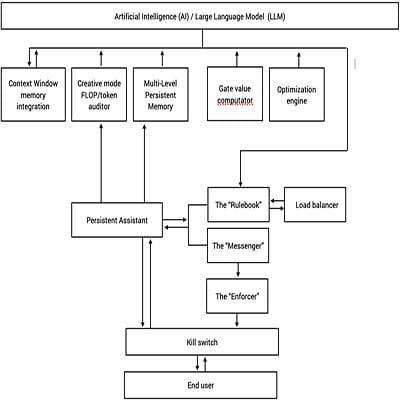
The train is leaving the station. AI 2.0 will require memory, governance and revenue. Are you on board?
 The next phase of AI is not about intelligence. It’s about structure. Systems that can remember. Systems users can control. Systems that can be priced in a way that maps to real cost.
Without those three things — memory, governance and revenue — AI 1.0 is where adoption stalls.
The train is leaving the station.
See story
The next phase of AI is not about intelligence. It’s about structure. Systems that can remember. Systems users can control. Systems that can be priced in a way that maps to real cost.
Without those three things — memory, governance and revenue — AI 1.0 is where adoption stalls.
The train is leaving the station.
See story
The five roles AI 2.0 will need
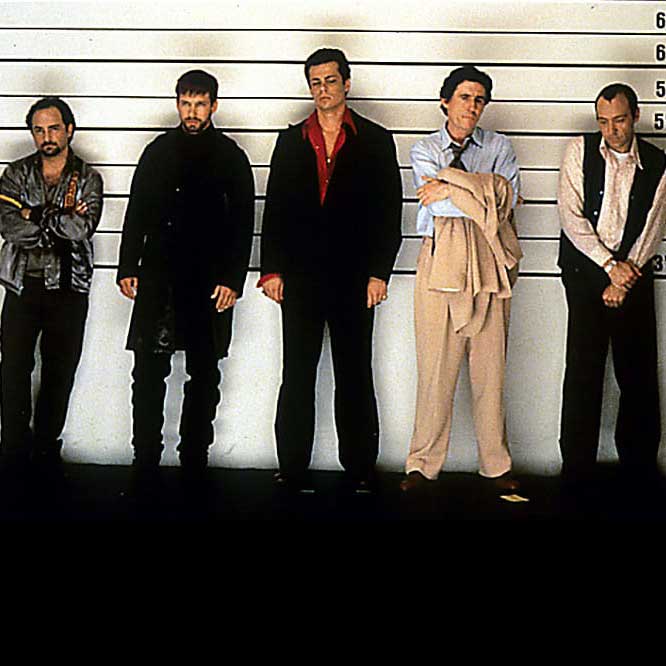 A single monolithic LLM trying to handle memory, reasoning, safety, preference capture and decision authority is the structural equivalent of letting one actor play every role in a courtroom drama — judge, prosecutor, defense attorney, witness, and stenographer all at once.
No governance system on Earth works like that.
AI 2.0 won't run that way, either.
See story
A single monolithic LLM trying to handle memory, reasoning, safety, preference capture and decision authority is the structural equivalent of letting one actor play every role in a courtroom drama — judge, prosecutor, defense attorney, witness, and stenographer all at once.
No governance system on Earth works like that.
AI 2.0 won't run that way, either.
See story
The Hallucination Engine
 Ever notice how the solution to a problem only creates another problem? How the cure is sometime worse than the illness? How the horseless carriage begat a whole host of problems we never had on horseback? How social media, which was supposed to connect us, only drove us deeper into isolation? Submitted for your approval: RAG, or Retrieval-Augmented Generation – a means by which LLMs could bridge the gaps between memory and cognition, and “fill in the blanks” imposed by the limitations of persistent memory and context windows. What might have seemed like a good idea at the time, has turned into a Frankenstein's monster: fabrications and out-and-out lies. See story
AI for Dummies
 I am not calling you a dummy. But I know you are time-starved so I won’t bury the lede: I may have made $30,000,000 in 30 minutes using AI. Do I have your attention now? Well, you need to read this entire story – to the end – so I can prove it. Can you spare five minutes? I’m serious. Just five minutes. But don’t take my word for it. Nelson Brown, former AME/News at The Virginian-Pilot, reported to me that, in fact, it took him only five minutes to read this story to the end. However, there is a passage, clearly marked, that might seem like rough sledding. But you don’t need to read that section. It is merely there as source material for a demonstration you can conduct yourself. See story
An open letter to Gary Vee
Hype doesn’t build systems. Energy doesn’t make architecture. Passion doesn’t produce compliance, provenance or ethics at machine scale. You need to ssh into Terminal and grep for data, not distraction. Ranting accomplishes nothing. Unless you’re Gary Vee:
Gary Vee turned up to 11. ’Cuz it’s one more, iddn’t it?
I’m not saying Gary isn’t smart or successful. He is. I’m saying he’s emblematic of a culture that confuses noise with depth — that treats AI as bogeyman instead of the technological shift it is. See story
After the AI bubble bursts, this comes next
 For the past two years, the industry fed on a fantasy: AI was exploding. Every investor deck, media headline, and VC podcast hyped an unstoppable wave of growth — exponential, transformative, inevitable. They all pointed to the same kind of chart: the hockey stick. Even when the projections were modest, they still sloped steadily upward. Confidence was baked in. But what actually happened? Instead of a hockey stick – or even modest growth, we got a flatline. Everyone had their eyes on the projection — not the reality. See story